
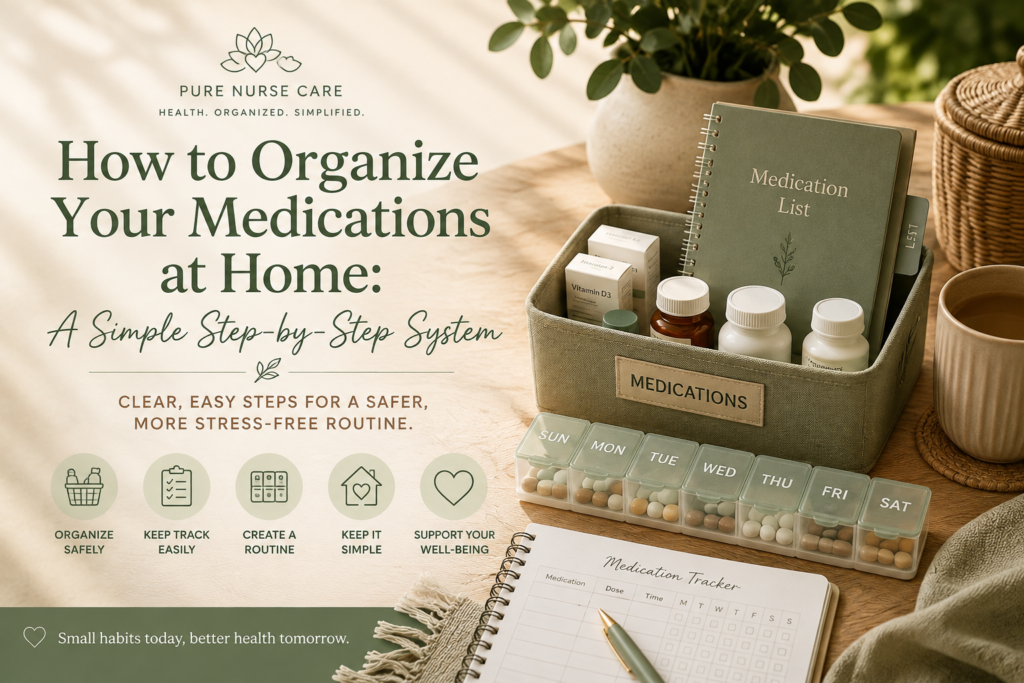
Medication can quickly become difficult to manage.
Prescription boxes, supplements, occasional medications and repeat prescriptions can all end up in different drawers, bags and cupboards.
Before long, finding what you need becomes harder than it should be.
A simple medication organization system can make your daily routine feel much calmer and more manageable.
Here’s how to create one.
Important: Medication should always be stored according to its specific storage instructions and kept safely away from children and pets. Some medications require special storage and should not be transferred into organizers.
Step 1: Gather Your Medication
Start by bringing together the medications you currently use so you can see what needs organizing.
Don’t forget occasional medications that may be stored separately.
However, medications requiring refrigeration or other specific storage conditions should remain stored according to their instructions.
The goal isn’t to put everything into one container — it’s to understand what you have and create a clear system.
Step 2: Check Expiry Dates
Take a moment to look at expiration dates and identify medication you no longer use.
Don’t automatically throw unused or expired medication into household waste or flush it away.
Follow the medication-disposal guidance in your country or ask your local pharmacist how it should be returned or disposed of safely.
Step 3: Create an Up-to-Date Medication List
Your organization system shouldn’t only organize the physical medication.
You should also know what you’re taking and why.
A medication list can include:
- medication name;
- dose;
- when it should be taken;
- relevant instructions;
- prescribing healthcare provider, if useful.
Keep the list somewhere accessible and update it when your medication changes.
It can also be useful to have available when speaking with a doctor, pharmacist or other healthcare professional.
Step 4: Choose a Safe Storage Area
Choose a designated area for medication that is appropriate for the medicines you use.
Avoid automatically storing all medication in a bathroom simply because it’s convenient. Heat and humidity can affect some medicines.
Instead, follow the storage information on the packaging or leaflet.
Your system could use a dedicated cupboard, drawer or storage container while keeping medication out of reach of children and pets.
Shop Medication Storage &Organization
Step 5: Use a Weekly Pill Organizer When Appropriate
If you take tablets regularly, a weekly pill organizer can make your routine easier to visualize.
Some organizers simply separate medication by day.
Others include multiple compartments for:
Morning — Noon — Evening — Bedtime
Choose the simplest organizer that matches your routine.
Step 6: Keep Daily and Occasional Medication Separate
If appropriate for your household and the storage requirements, it can help to distinguish between medication used every day and products used only occasionally.
For example:
Daily medication
Items you need as part of your regular routine.
Occasional medication
Items you only use when needed and according to their directions.
Clear organization makes it easier to find what you need without searching through everything.
Step 7: Add a Medication Tracker
Your medication organizer tells you where your medication is.
A medication tracker helps you remember whether you’ve taken it.
You could use:
- a printable tracker;
- a notebook;
- a medication app;
- a weekly checklist.
Keep your tracker somewhere you naturally see during your medication routine.
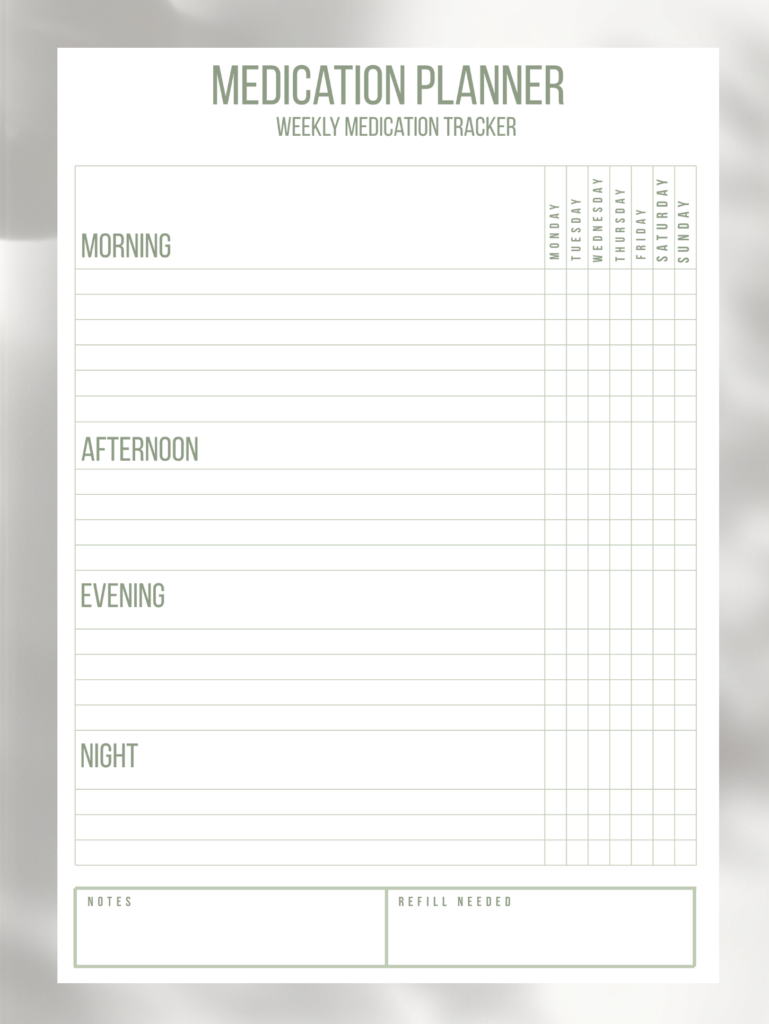
Make Medication Tracking Simpler
A clear medication system is easier to maintain when you can see what you’ve already taken. This printable weekly medication planner helps you keep track of your morning, afternoon, evening and night medication in one simple overview.
Related: How to Keep Track of Medication: A Simple System That Works
Step 8: Create a Weekly Reset Routine
Once your system is organized, keeping it that way becomes much easier.
Choose one day each week for a quick medication reset.
You might:
review your medication schedule, update your tracker, prepare an appropriate pill organizer, check supplies and note prescriptions that may need refilling.
It doesn’t need to take long.
The goal is simply to prevent your organization system from becoming cluttered again.
Step 9: Create a Small Travel System
Your home system may work perfectly — until you need to leave the house.
Having a separate travel solution can make medication management easier when you’re away.
Depending on your medication and local requirements, this might include a medication pouch, compact organizer and copy of your medication list.
Always check travel and storage requirements for your specific medication, especially when travelling internationally.
Shop Travel Medication Organizers
Your Simple Medication Organization Checklist
Before you finish, check your setup:
✓ Medication reviewed
✓ Expiry dates checked
✓ Medication list updated
✓ Safe storage area chosen
✓ Weekly organizer prepared if appropriate
✓ Medication tracker ready
✓ Weekly reset day chosen
✓ Travel system prepared if needed
Final Thoughts
Medication organization doesn’t need to be complicated.
A designated storage system, an up-to-date medication list, a suitable pill organizer and a simple tracking routine can make everyday medication management much easier.
Start with one small change and build your system from there.
Ready to create a clearer medication system at home?
Related reading:
How to Build a Medication Routine That Actually Sticks
Essential Tips for Safe Medication Management
How To Never Forget To Take Your Medication: 10 Simple Tips That Actually Work
Ontdek meer van PURE NURSE CARE
Abonneer je om de nieuwste berichten naar je e-mail te laten verzenden.