
Taking medication correctly is one of the simplest ways to support your health, yet many people unintentionally make small mistakes that can affect their treatment.
The good news? Most medication mistakes are preventable with a few simple habits.
Here are seven common medication mistakes and practical ways to avoid them.
Important: Medication instructions vary between medicines. Always follow the instructions provided with your medication and contact your doctor or pharmacist if you are unsure.
1. Forgetting to Take Your Medication
Missing doses happens more often than most people think. Busy schedules, changing routines, or simply forgetting can make it difficult to stay consistent.
How to avoid it
- Set a daily reminder.
- Use a weekly pill organizer.
- Keep your medication in a visible, safe place.
- Link taking your medication to an existing habit, such as brushing your teeth or eating breakfast.
👉 Related: How to Never Forget to Take Your Medication
2. Taking Medication at Different Times Every Day
Many medications work best when taken consistently at the same time each day.
An irregular schedule can make it easier to miss doses or accidentally take medication twice.
How to avoid it
Choose one fixed time that naturally fits into your daily routine.
Consistency is more important than perfection.
3. Not Keeping an Updated Medication List
Many people rely on memory.
However, keeping an up-to-date medication list can be extremely helpful during doctor visits, emergencies, or pharmacy appointments.
How to avoid it
Keep a simple medication tracker that includes:
- Medication name
- Dosage
- Time
- Notes
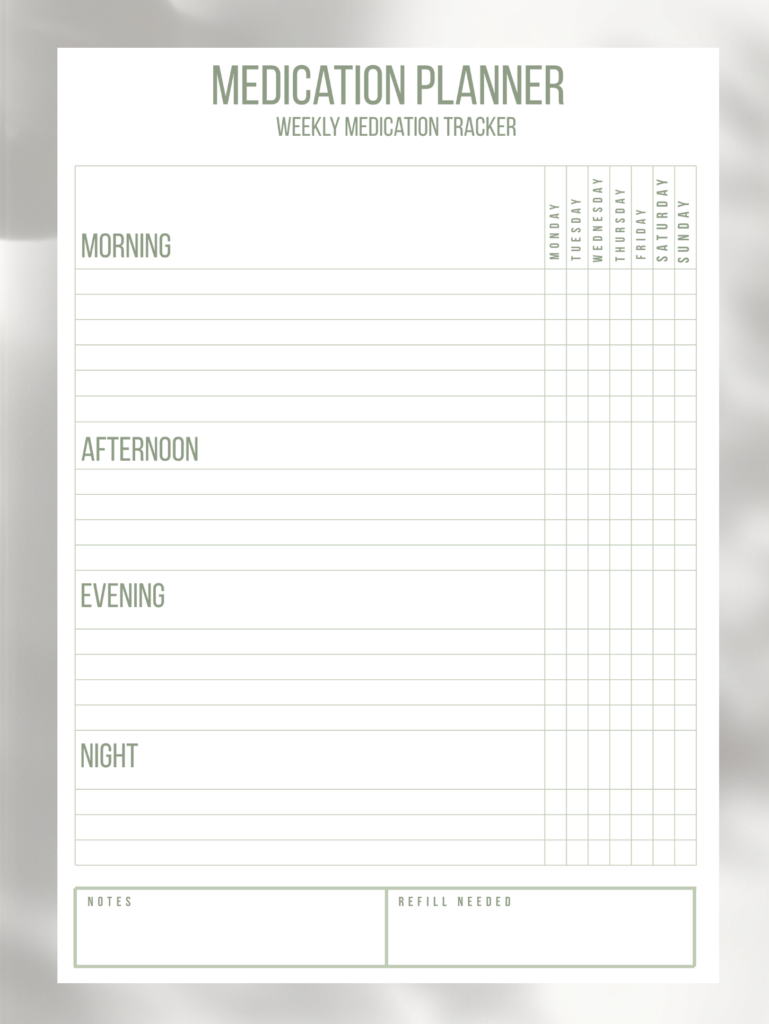
Keep Your Medication Schedule Clear
A simple weekly overview can make it easier to keep track of what you need to take and when. This printable Medication Planner gives you space to organize morning, afternoon, evening and night medication for the entire week.
4. Skipping Medication Because You Feel Better
Feeling better doesn’t always mean your treatment is complete.
Stopping medication without medical advice may reduce its effectiveness or cause symptoms to return.
How to avoid it
Always follow the instructions provided by your healthcare professional.
If you have concerns about side effects or your treatment, discuss them with your doctor or pharmacist before making changes.
5. Running Out of Medication
Waiting until the last pill often creates unnecessary stress.
How to avoid it
- Check your medication supply every week.
- Refill prescriptions before you run out.
- Set a reminder several days in advance.
6. Ignoring Simple Organization
Medication can quickly become confusing when different bottles, blister packs, and schedules pile up.
How to avoid it
Create a simple medication station with:
- Pill organizer
- Water bottle
- Medication list
- Weekly planner
Keeping everything together saves time and reduces mistakes.
7. Not Tracking Your Progress
Small changes often go unnoticed without a simple tracking system.
Monitoring your medication routine helps you stay accountable and notice patterns.
How to avoid it
Use a printable medication tracker or planner to record:
- Daily doses
- Missed medication
- Notes
- Symptoms
- Questions for your healthcare provider
Final Thoughts
Building a healthy medication routine doesn’t require perfection.
Small, consistent habits can make medication management easier, reduce stress, and help you stay on track.
Start with just one improvement today, and build from there.
Ready to make your medication routine easier?
Medical disclaimer: This article provides general educational information and does not replace individual medical advice. Medication instructions, timing, dosage and storage requirements vary between medicines. Always follow the instructions provided with your medication and consult your doctor, pharmacist or other qualified healthcare professional if you are unsure.
Discover more from PURE NURSE CARE
Subscribe to get the latest posts sent to your email.